As the climate is changing, it is rapidly melting the ice, damaging polar bears’ habitat. Polar bears rely on the ice for hunting seals, which is their main food source. Polar bears hunt seals from the surface of the sea ice. As the ice shrinks, their access to prey decreases. Polar bears also rely on ice for denning. When polar bears are denning they make little snowdrifts in the ice, so that they can give birth or nurse their cubs during the winter months. The mother waits and does not eat so she can stay with her cub while it’s developing, then they can emerge in spring and go back to their hunting lifestyle.
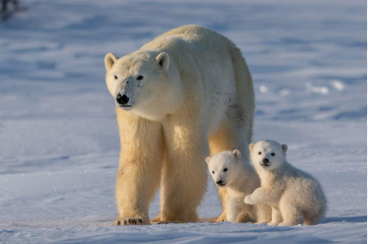
Ice melting is leading to the polar bears leaving to find new areas to live. They will travel far and long, which forces them to fast while they are on land. This then leads to starvation, declining health, and lowers reproductive rates, particularly for females and cubs. The sea ice melts in the early spring and freezes later in fall; that makes more time that the polar bears are on land with no food. The primary reason for the ice melting is from global warming which is created by human activities. We are burning greenhouse gasses like carbon dioxide, methane, and nitrous oxide. When they are burned, these gases get trapped into the atmosphere. Things like cutting down trees and certain manufacturing processes like production of cement are letting out large quantities of gas.
Now it’s up to us to help save the polar bears from going extinct. To start, we can address climate change through daily actions like recycling or reducing energy use. To reduce energy we can adjust the thermostat a few degrees, switch to LED energy-efficient light bulbs, and unplug electronics when not being used. These gases act like a blanket, trapping the sun’s heat and causing the planet’s surface temperature to rise. The Arctic is especially vulnerable and is warming almost four times faster than the global average in a process known as Arctic amplification.