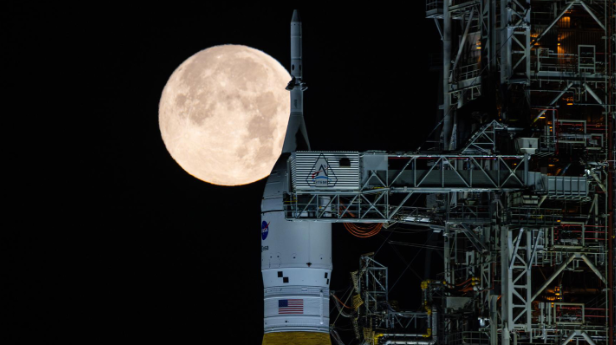
For the first time in over half a century, we sent people back to the Moon. Artemis II took four astronauts on a flyby around the far side of the Moon (farther than we’ve ever been) to test the capabilities of humans in deep space and the Orion crew capsule. On April 1st-10, Reid Wiseman (Commander), Victor Glover (Pilot), Chistina Koch (Mission Specialist), and Jeremy Hansen (Mission Specialist) paved the way for exploration and science on the Moon. Here’s the day by day of this iconic mission.
Day 1: At 6:35 EDT, Artemis II launched off Kennedy Space Center Launch pad 39B. The crew noticed a “blinking fault light” as well as a clogged toilet, also known as the Universal Waste Management System. With help from ground control, the toilet was fixed. They stayed in high Earth orbit for the first day and deployed 4 Cubesats which are little shoe-box sized satellites. Victor Glover ran a successful test on how well the Orion spacecraft could navigate close to other objects. The crew got to nap for about four hours before they were woken up for a perigee raise maneuver burn which raises the lowest orbital point. The crew was able to go back to sleep.
Day 2: A trans-lunar injection burn got the crew officially on track for their trip to the moon and back. After that, the crew got to have their first official press conference of Artemis II. They tested the flywheel exercise machine which is important because the astronauts need to counteract bone and muscle loss in space. Back on the Earth, the Lunar Science team was building the official targeting plans for the flyby. The targeting plans are what the crew will be observing.
Day 3: Halfway point! A trajectory burn was scheduled but the Orion capsule was already in perfect position so it was cancelled. The crew prepped the capsule for lunar observations by setting up cameras, practicing micro gravity observations, and stowing things. They also did a medical demonstration where they practiced CPR and choking in space. Christina Koch also tested the emergency comm system.
Day 4: Another trajectory burn was scheduled but the Orion capsule was good once again so it was cancelled. They reoriented the Universal Waste Management System vent so that it was towards the sun because there was some ice buildup. The lunar science team uploaded the lunar targeting plan for the next day. Christina Koch and Jeremy Hansen took turns providing feedback to Mission Control 3 degrees and 6 degrees of freedom of Orion controls.
Day 5: The crew studied the lunar flyby plan and practiced drills in the orange suits known as the Orion Crew Survival Suit (OCSS). These suits protect the crew from events like capsule depressurization. A trajectory burn was finally done and little observations were made. Jeremy Hansen was the only one of the crew who had not been in space yet so he received his gold astronaut wings. These wings are badges that signify that the crew member has been to space. It was also Easter so instead of hiding little plastic eggs, the crew hid dehydrated scrambled eggs around the capsule.
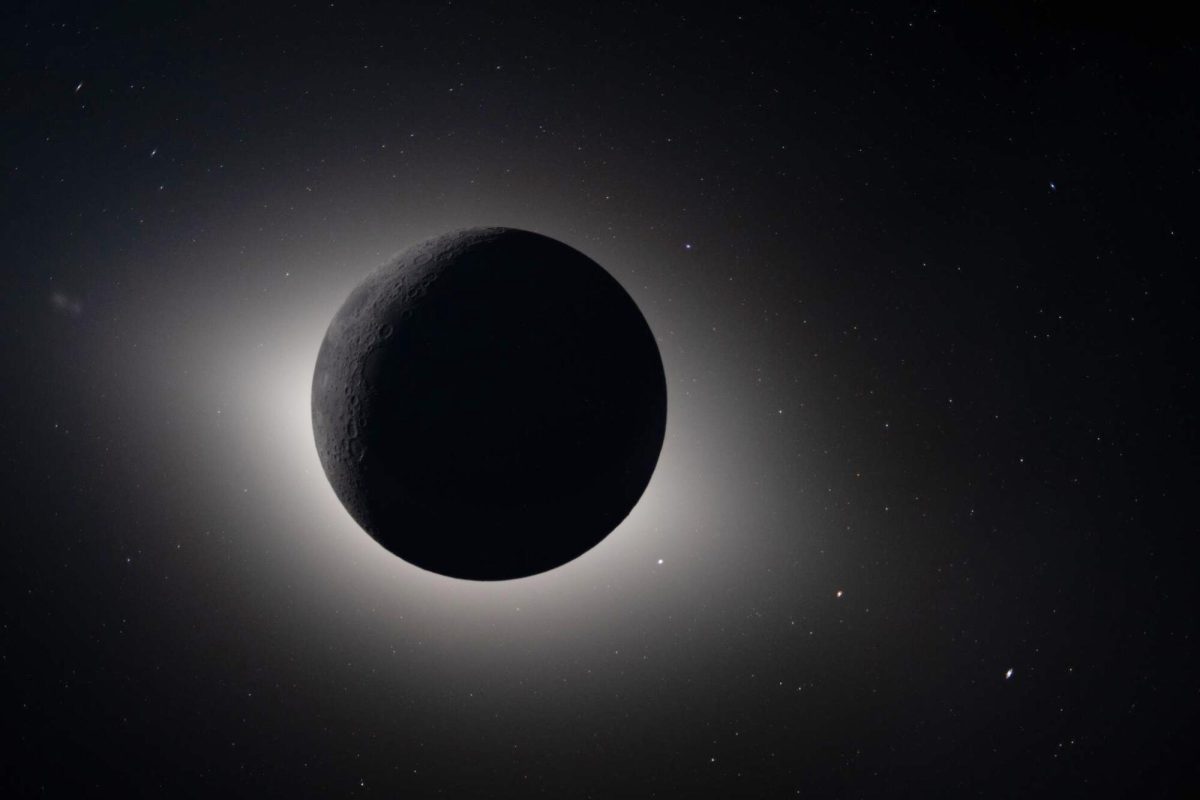
Day 6: Before he passed away on August 7, 2025, former Apollo astronaut and legend Jim Lovell recorded a message to the Artemis II crew that was played on the morning of day 6, the same day the crew broke the record he and the other Apollo 13 crew set, becoming the farthest humans from Earth. The crew got to name two lunar craters. One is “Integrity” which is the name of their ship and the other was named “Carroll”, named after Ried Wiseman’s late wife, Carroll Taylor Wiseman, who passed away in 2020. The crew made lunar observations and got to see a solar eclipse on the far side of the moon. The crew’s families on the ground stopped by mission control and were able to talk to them. We got a nice message from the crew before temporarily losing radio contact behind the moon. “We love you, from the Moon!”
Day 7: The crew of Artemis II got to make a ship to ship call to the ISS. The crew mainly answered questions the science team back on Earth had about their observations while it was still fresh in their mind. The crew made a return correction burn which corrected its path back to Earth.
Day 8: The crew prepped for reentry by packing everything up and ran cabin pressure tests. They practiced maneuvering for better communications and they had another press conference.
Day 9: Halfway to home. Another return correction burn was made. The crew mainly packed and prepped for reentry and had public affairs.
Day 10: On the last day, the crew prepared for splashdown. They made the third and final return correction burn and ran some leak checks. They donned their suits and got in their seats for return. We lost communication with them for about 6 minutes as they reentered the atmosphere. They successfully splashed down in the Pacific Ocean by San Diego, Florida at around 8:00, successfully ending the mission.