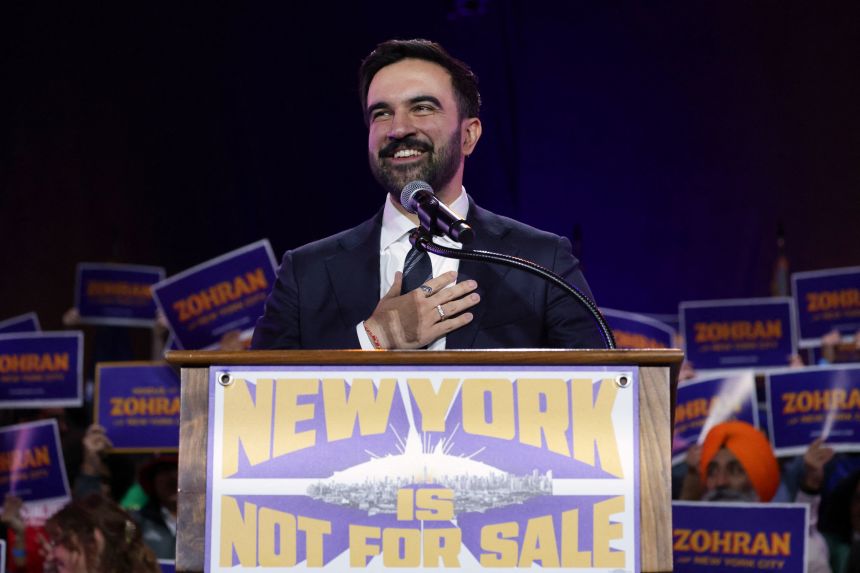
Zohran Mamdani has officially been elected the next mayor of New York City, marking a historic moment for the city’s politics. At 34, he became the first Muslim mayor, the first mayor of South Asian descent, and the youngest person to hold the office in more than 100 years.
“The future is in our hands,” Mamdani told supporters at his election-night event, calling his win a victory over “a political dynasty.” The Associated Press called the race shortly after polls closed, confirming his defeat of Independent candidate Andrew Cuomo and Republican Curtis Sliwa.
Mamdani’s rise has been dramatic. A year ago, he was known mainly as a state assemblymember from Queens. Since then, he won the Democratic primary by double digits and became a major figure in progressive politics. During his victory speech, he quoted early-1900s socialist leader Eugene Debs, reflecting the left-leaning platform that defined his campaign.
Some of Mamdani’s biggest proposals include fare-free buses, freezing stabilized rents, universal child care, raising the minimum wage, and increasing taxes on major corporations and the wealthiest New Yorkers. He also promised to push back against President Trump’s threats to cut federal funding from New York City.
Cuomo, who ran a centrist campaign, warned in his concession speech about “a dangerous, dangerous road,” criticizing Mamdani’s policies and political ideology. Mamdani has also faced challenges over his long-held criticism of the Israeli government, which has created tension among parts of the city’s large Jewish community.
Even with these controversies, Mamdani maintained a strong lead in polls heading into Election Day. His campaign was powered by young voters, progressive endorsements, and tens of thousands of volunteers. Early-voting numbers broke city records, with more than 735,000 ballots cast before Election Day.
This year’s election was unusually chaotic. Current Mayor Eric Adams initially ran for reelection, then dropped out in September. Cuomo entered the race as an Independent after losing the Democratic primary, forming a last-minute alliance with Adams. Sliwa also stayed in the race despite pressure to withdraw.
In the end, more than two million New Yorkers voted — the highest turnout for a mayoral election since 1969. With Mamdani’s victory, New York City enters a new political era, one shaped by a younger, more progressive base and a mayor who has promised major changes to the cost of living, transit, and city services.