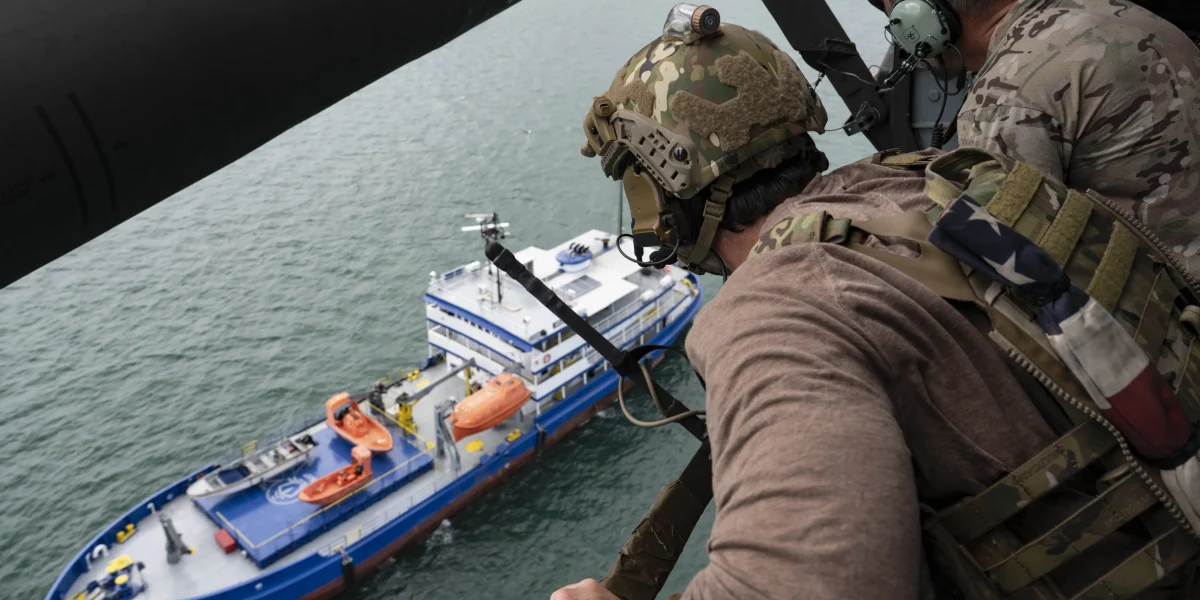
In early September 2025, the U.S. military, under the orders of President Donald J. Trump, launched a lethal strike on a small vessel in the Caribbean Sea, killing eleven people aboard. The administration claimed the boat was carrying illegal drugs bound for the United States and labeled the occupants “narco-terrorists.”
That strike marked the opening salvo of a broader military campaign, known as Operation Southern Spear, targeting small sea vessels suspected of trafficking narcotics through the Caribbean and the Eastern Pacific. Since then, U.S. forces have carried out at least 22 operations, resulting in the deaths of 87 people.
According to administration officials like Secretary of Defense Pete Hegseth and Secretary of State Marco Rubio, the strikes are an essential escalation, a response to what they describe as a failed interdiction strategy and a direct threat to American public health and safety. “Instead of interdicting it, we blew it up, and it will happen again,” Rubio said.
In a moment of bold rhetoric, President Trump declared that each destroyed boat corresponded to “25,000 American lives saved.” Yet experts have challenged that claim. According to fact-checkers, the administration has not provided evidence substantiating how many lethal doses of drugs were aboard these vessels, and the math behind “lives saved” does not add up.
On the other side of the debate, global human-rights authorities have raised grave concerns. The United Nations Human Rights Council, via its commissioner Volker Türk, condemned the strikes as “unacceptable,” calling them potentially extrajudicial killings that violate international law.
Even some lawmakers who generally support stricter drug policies are now questioning the legality and morality of such operations. Investigations have begun in congressional committees, prompted especially by reports that a second strike was ordered on a boat after survivors of the first strike had already been identified, a move that critics argue amounts to murdering people already in danger and potentially unarmed.
The administration’s refusal so far to release full unedited video evidence has only deepened suspicions. Though a partial clip of a strike was shared, key questions remain unanswered. Who exactly was on these boats? What evidence links them to criminal or cartel activity? What protocols were followed before lethal force was authorized?
Supporters argue that bold action is needed to stem flows of narcotics and protect public health. But critics stress that without transparency, due process, or public evidence, such strikes risk undermining both legal norms and human rights, all in the name of a war that historically has had deep racial, social, and political consequences. As the campaign continues, the United States faces growing scrutiny at home and abroad, with many asking whether the price of deterrence is too high.