Well, it’s one week before Thanksgiving break, but what happened this week in history?
On November 17th, 1973, U.S. President Richard Nixon insists that he is “not a crook” during the Watergate scandal. In June 1972, five burglars broke into the Democratic National Committee (DNC) headquarters in the Watergate complex in Washington, D.C. The burglars’ intentions were to attempt to plant listening devices, but were caught red-handed when a security guard noticed the tape on the locks, and called the police. The burglars were arrested and the investigation of the break-in revealed a link to high-level officials in President Nixon’s administration, including the Committee to Re-elect the President (CREEP). The Nixon administration engaged in a cover-up, which included the obstruction of justice and pressuring witnesses. It wasn’t until the Supreme Court forced Nixon to release the tapes to become the turning point of the scandal. They made him do this, because there was a discovery of secret tape recordings in the Oval Office, which contained crucial evidence of his involvement in the cover-up. One of these tapes, called the “Smoking Gun” tape, documented the initial stages of the Watergate cover-up. While in Orlando, Florida at Walt Disney World, he would say his famous line to reporters and try making a joke out of the situation, but in reality, it was taking a toll on his mental and physical health. Facing certain impeachment for obstruction of justice, abuse of power, and contempt of Congress, he resigned from the presidency on August 9th, 1974, becoming the first and only president to do so. 48 people were convicted of crimes related to the scandal. It also led to financial reforms and legislation aimed at increasing government transparency and accountability.
On November 18th, 1978, Peoples Temple founder Jim Jones leads hundreds of his followers in a mass-murder suicide at an agricultural commune in a remote part of the South American nation of Guyana. The Peoples Temple wasn’t originally a cult with a mass killing, it was founded in Indiana by Jim Jones in the 1950s for an integrated Christian sect that preached social equality and racial justice. In the 1960s, he and his followers moved to Northern California, where the church gained a political influence and a larger following. Later, the church was found with reports of financial fraud, physical abuse, and mistreatment of children when they began to rise, causing Jones to move his followers to Guyana and created a settlement, known as Jonestown. Life in Jonestown was terrible with people doing hard labor for long hours, lived in overcrowded conditions, and faced severe punishments if you questioned Jones. Jones confiscated passports and money, ensuring they had no chance of escaping and spreading the news about these conditions. He conducted “mock suicide drills” in preparation for a “revolutionary suicide”. In November 1978, U.S. Congressman Leo Ryan travelled down to Jonestown with “concerned relatives” and journalists to investigate allegations of abuse and people being held against their will. The visit was going well, until several members asked to go with Ryan when he was preparing to leave on November 18th. On a nearby airstrip, gunmen of Jones shot at the group killing Congressman Ryan, three journalists, and one defecting Temple member. This remains the only time that a U.S. Congressman was killed in the line of duty. Jones feared of the consequences of killing the congressman, so he ordered the entire group to commit mass suicide. He gathered followers in the main pavilion and made them drink a cocktail of cyanide, sedatives, and a powdered fruit drink (often misidentified as Kool-Aid, but actually Flavor-Aid). Children were poisoned first, then the adults, with guards shooting at anyone who tried to escape into the jungle. Jones himself died of a gunshot wound to the head, which was likely self-inflicted. Guyana officials discovered a total of 909 people died in Jonestown, with 304 of those being minors. With the deaths on the airstrip, there were 918 people. A handful of survivors survived by hiding or escaping into the jungle, or were in the capital city of Georgetown. It was the largest loss of American civilian life in a non-natural disaster event until 9/11.
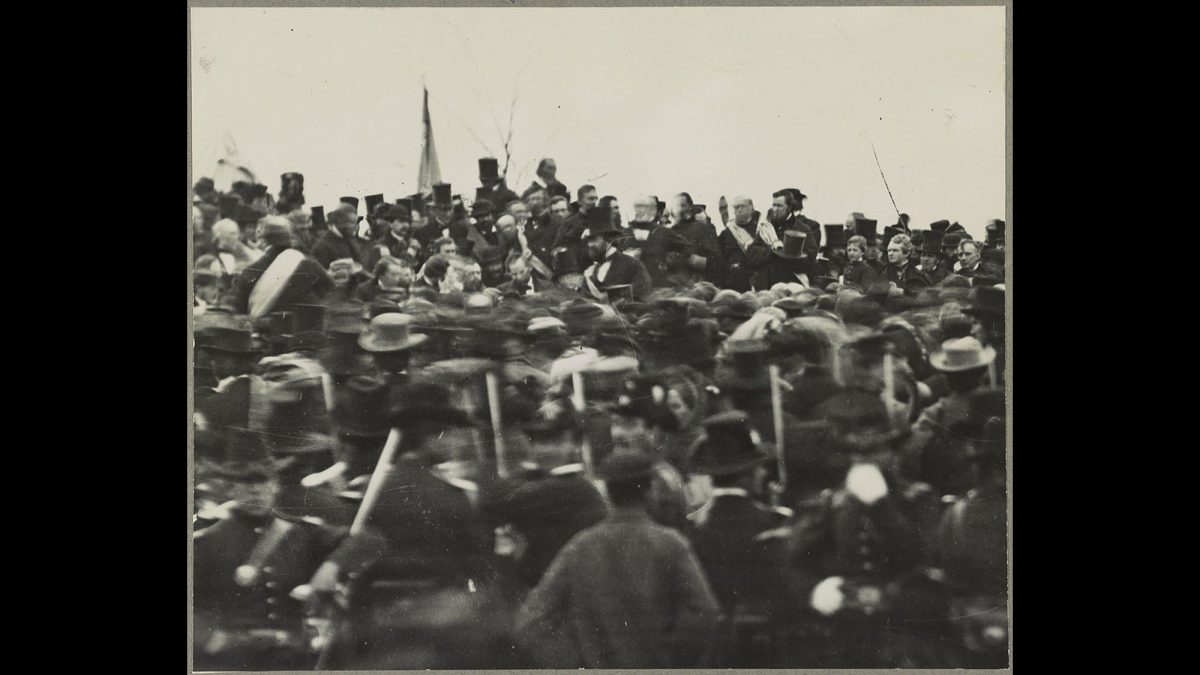
On November 19th, 1863, President Lincoln delivers Gettysburg Address at Gettysburg, Pennsylvania. This speech is one of the most memorable speeches in American history and helped the Union to continue fighting and win the Civil War. Early that year, on July 1st – July 3rd, the Battle of Gettysburg took place and was one of the bloodiest battles in the American Civil War. Over the course of three days, more than 45,000 men were killed, injured, captured, or went missing during the battle. The battle was also a turning point of the war with General Robert E. Lee’s defeat and retreat from Gettysburg marked the last Confederate invasion of Northern Territory and the beginning of the Southern army’s ultimate decline. David Wills, an attorney and created a cemetery for the dead, wrote a letter to Lincoln asking him to say a few words in Gettysburg. On November 18th, 1863, he would travel to Gettysburg with his Secretary of State William Seward, Postmaster General Montgomery Blair, Interior Secretary John Usher, Lincoln’s personal secretaries John Hay and John Nicolay, several members of the diplomatic corps, some foreign visitors, a Marine band, and a military escort. About 10,000 to 15,000 people were at the Gettysburg Address and listened to Lincoln’s short speech. If you want to read it for yourself, here is the link: https://rmc.library.cornell.edu/gettysburg/good_cause/transcript.htm
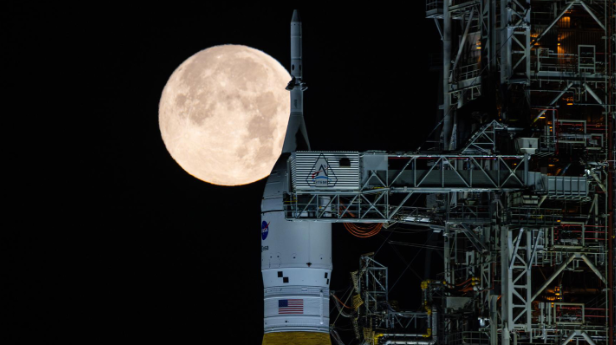
On November 20th, 1998, the first component of the International Space Station (ISS), the Zarya Module, was launched into orbit. The module was launched from the Baikonur Cosmodrome in Kazakhstan and was lifted into orbit by a Russian Proton rocket. It is known as a Functional Cargo Block (FGB), Zarya was designed to be the first piece of the ISS, providing initial control and power while waiting for other elements. Later, the second component, the American-built Unity node, was launched two weeks later on December 4th, 1998, and was later attached to Zarya in orbit. This was a major step in world peace with other nations adding to the ISS to make it larger and home to astronauts doing scientific research in space.
On November 21st, 1620, the Mayflower Compact was signed on the Mayflower by Pilgrims before creating the colony of Plymouth in modern day Massachusetts. The date of the signing was on November 11th, 1620 based on the Old Julian Calendar used back then, but the date changed to the 21st based on the Gregorian Calendar. This document established the first form of self-governance in the New World, based on the consent of the governed. The first colony of Jamestown, was under control of the Virginia Company which was under the control of the British, but the pilgrims set off to the New World for religious freedom and escape from the Protestant rule of the British. The journey was rough over the Atlantic Ocean, but the pilgrims believed in laws and rules in governing the New World. John Carver is often credited for writing the Mayflower Compact and later became the first governor of the Plymouth Colony. This settlement later made peace with the local native population and created the First Thanksgiving, which led to a chain of events to cause Thanksgiving to become a national holiday.