Well, it’s finally the week of Thanksgiving and the last week before December with the holiday season around the corner, but what happened in history this week?
On November 24th, 1859, Charles Darwin published On the Origins of Species and Natural Selection, a groundbreaking book that affected the world of science. He based the book on his discoveries during his expedition of the HMS Beagle. The trip lasted for 5 years from December 27th, 1831 to October 2nd, 1836, and its purpose was to survey the coast of South America. Captain Robert FitzRoy commanded the ship and was later known for his contributions to meteorology (the study of weather) by making the first public weather forecast. Darwin went on the trip due to Captain FitzRoy wanting an educated, gentlemanly companion to join the survey, with his professor’s recommendations for the trip, Darwin agreed because of his passion for natural history and geology. The most famous part of the trip was at the Galapagos Islands, where Darwin discovered a wide variety of different beaked finches, providing key evidence for his groundbreaking work. He also witnessed evidence of geological change, collected fossils, and observed natural distributions, which all helped him formulate his theories on evolution and natural selection. When he finished writing his book, the initial reactions were mixed and intense, with people disagreeing with Darwin due to their beliefs in religious creation, but there was many supporters who defended his work, leading to many debates and making it a bestseller.
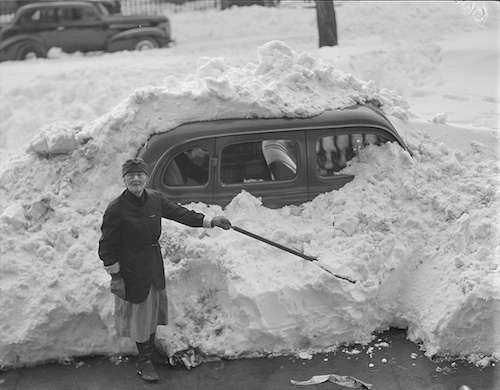
On November 25th, 1950, one of the largest snowstorms in American history called “storm of the century” hits the eastern part of the United State, killing hundreds of people and causing millions of dollars in damage. This storm is also called the “Appalachian Storm”, and it dumped record amounts of snow in parts of the Appalachian Mountains. This massive storm formed over North Carolina just before Thanksgiving, which was very bad due to the amount of people travelling for the holiday, but let’s get back to the point. The storm struck western Pennsylvania, Eastern Ohio, and West Virginia. These areas were covered with several feet of snow for several days and travel was impossible for a week. A large windstorm covered a large area with New York City getting 94 mile-per-hour wind gusts. At Bear Mountain, just north of the city, a record 104 mph gust was recorded. Winds in New England were of hurricane- like force with the addition of high tides and wind-driven surf battered the East Coast. Low temperatures were recorded in North Carolina and Tennessee, just south of the storm, even in Mount Mitchell, North Carolina, a temperature of 26 degrees below zero was recorded. The storm was responsible for 160 lives over several days.
On November 26th, 1922, American cartoonist Charles M. Schulz is born in Minneapolis, Minnesota. He is most famous for his comic strip, The Peanuts, which is one of the most famous cartoons with many holiday specials and one major movie. Schulz created The Peanuts, because of his lifelong ambition to be a professional cartoonist and to explore the themes of life, love, and insecurity through the simple, relatable lives of children. Many of his characters include Charlie Brown, Snoopy, Linus, Woodstock, Pigpen, Peppermint Patty, and many more. He passed away on February 12th, 2000, by passing in his sleep in Santa Rosa, California with complications with colon cancer. He was 77 when he died.
On November 27th, 1924, the first Macy’s Thanksgiving Day Parade took place in New York City and the large balloons were later introduced in 1927. Originally, the parade was based on Christmas and marked the beginning of the Christmas shopping season. Santa Claus always remained a character in the parade and was featured in the 1947 film Miracle on 34th Street, which is sometimes played following the parade.
On November 28th, 1520, famous explorer Ferdinand Magellan made his way to the Pacific Ocean, becoming the first explorer to find an ocean route to the Pacific and Asia. During this time, the Portuguese and the Spanish were trying to find ways to Asia to gain spices and riches, but were having a hard time trying. Columbus tried, but failed when he reached the Caribbean, not Asia or mainland America. He would travel through a strait under the tip of South America, later called the Strait of Magellan to reach the Pacific. Later in 1521, he would later die from a poison tipped arrow on April 21st during his expedition. He would not be able to circumnavigate the world, but the survivors on his ship would be the first to do so.