Well, it’s finally one week more until Christmas and yesterday was the first night of Hanukkah, so here comes eight crazy nights, but what happened in history this week?
On December 15th, 1791, the Bill of Rights was finally ratified in the United States and became the first amendments of the Constitution. The Bill of Rights contains the first 10 amendments that describe the basic rights of people in the United States like the right to bear arms, the right to remain silent, the right to a fair trial, and the right of freedom of speech, religion, press, and assembly. The Bill of Rights are influenced by the English Bill of Rights of 1689, and were also drawn up from Virginia’s Declaration of Rights, drafted by George Mason in 1776. Mason was a lifelong champion of individual liberties (fundamental rights inherited by each person), and in 1787, he attended the Constitutional Convention and criticized the final document for lacking constitutional protection of basic political rights. With the ratification struggle that followed, Mason and other critics agreed to support the Constitution if amendments would be passed for the Constitution. Virginia finally became the 10th of the 14 States to approve 10 of the 12 amendments, thus giving the Bill of Rights the majority of state ratification necessary to make it legal. The two amendments dealt with the concern of the population system of representation, but the second one dealt with the prohibition of the payment of Congressional members from taking effect until an election intervened, which would be voted in as the 27th Amendment in 1992.
On December 16th, 1773, the Boston Tea Party takes place with a group of Massachusetts colonists disguised as Mohawk Indians and board three tea ships, while dumping 342 chests of tea into Boston Harbor. This dumping was a form of protest against the Tea Act of 1773, which was passed by the British Parliament to tax tea and make more money for the East India Company by lowering its tea tax and granting a monopoly on the American tea trade. Colonists viewed this as another example of taxation tyranny. When the three tea ships, the Dartmouth, the Eleanor, and the Beaver, arrived in Boston Harbor, the colonists demanded that the tea should be returned back to England, but the governor Thomas Hutchinson refused, so Patriot leader Samuel Adams organized a “tea party” with about 60 members of the Sons of Liberty, an underground resistance group that protested against the British. The tea that was dumped into the harbor was worth around $2 million in today’s money. Parliament was outraged so they passed the Intolerable Acts in 1774, which caused the colonists to call for the first Continental Congress to consider a united American resistance against the British.
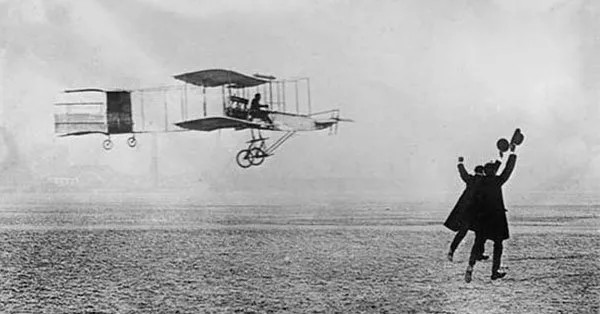
On December 17th, 1903, Wilbur and Orville Wright made the first successful propelled flight in history. Orville piloted the gasoline-powered, propeller-driven biplane, which stayed aloft for 12 seconds and covered on its inaugural flight near Kitty Hawk, North Carolina. Their plane changed the world with making travel, transportation of goods, and connection around the world easier, allowing for people to travel farther distances without a car or train.
On December 18th, 1946, award winning film director Steven Spielberg was born in Cincinnati, Ohio. He is known for his films like Jaws (1975), Schindler’s List (1993), Saving Private Ryan (1998), Catch Me If You Can (2002), the Indiana Jones films (1981-2023), The Goonies (1985), Jurassic Park (1993), E.T (1982), and other famous movies. He is also known for being one of the greatest film directors in Hollywood and is known for winning many Academy Awards and Golden Globes. He is turning 79 years old on Thursday.
On December 19th, 1843, Charles Dickens’ classic story “A Christmas Carol” was published. Many people know the story as Ebenezer Scrooge, a miserly misor, who is visited by three spirits, the Ghost of Christmas Past, the Ghost of Christmas Present, and the Ghost of Christmas Yet To Come, not the Ghost of Christmas Future. He sees the wrong in his ways and becomes a figure in Tiny Tim’s life. Dickens is known for his other stories, which were best sellers, but his book before A Christmas Carol was a flop in the market, so Dickens had to write a new story to be published. He used his experience as living poor and the conditions of Victorian England as a main idea in his story. Many movie adaptations don’t follow the original book with scenes like the Ghost of Christmas Present lifting his robe to show to starving children, which represents a boy (Ignorance) and a girl (Want) clinging to his robe and shows how children used to live in Victorian England, and how Scrooge gives Bob Cratchit a raise the day after Christmas.