
It’s finally the holiday season and not unlike us, many ancient peoples are also going to be celebrating. Here are just a few holidays ancient civilizations celebrated.
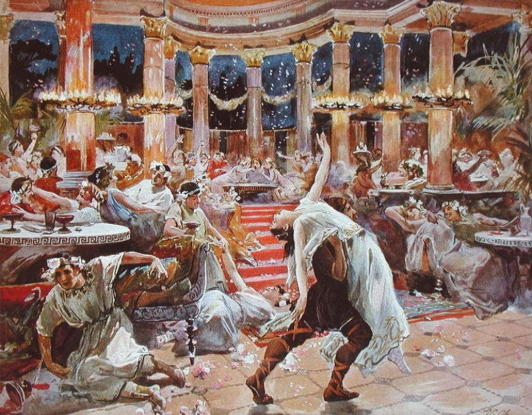
Saturnalia: Saturnalia was a Roman holiday dedicated to Saturn, the god of harvest, agriculture, and time. It was originally celebrated on December 17 but eventually extended to the whole week ( Dec 17-23 ). All of the schools and courts would be closed down and people would share gifts and spend time together. Everyone was allowed to participate in the festivities, including the slaves who in some cases got to sit at the head of the table during a feast and have their masters serve them. Some households would choose a mock king that would cause mischief during the celebrations. Most celebrations were held at the Temple of Saturn and a pig would be publicly sacrificed there on the first day of festivities.
K’atun: K’atun was celebrated by the Mayans at the end of every 20 years ( based on the Mayan Long Count calendar). Honey, turkey, cocoa, maize, and fermented beverages were usually eaten during the celebration. Blood sacrifices and offerings of jade, food, and incense were given to nourish the gods. Rulers carved deities and ceremonial bars out of stone.
Wepet-Renpet: Wepet-Renpet translates to “Opening of the year”. It was an Egyptian holiday that acted as their new year. It was celebrated mid-July when the Nile would flood and when the star Sirius made its first reappearance. They worshiped deities associated with the new year like Ra ( sun god ) and Hapi ( god of the Nile and floods ). They especially worshiped Osiris, the god of rebirth and fertility. People would give gifts, have community feasts, and pray. They would put their statues of gods outside for sun regeneration and people would make paper boats and put them on the Nile facing west ( towards the afterlife ) for Osiris.
Yule: Yule was celebrated during the winter solstice by Germanic people. Its origin is most likely from ancient Norse celebrations like jól. Like Christmas now, people would decorate with holly and mistletoe. People would make toasts to the gods Odin, Thor, and Freyr and have large feasts. It was a Norse tradition to make animal sacrifices, eat the meat, and sprinkle the blood on alters. They would clang pots, sing, and spread spiced cider to ward off good spirits and ensure a good harvest. The most notable tradition is the burning of the Yule log. They would burn a log for days believing it welcomed the sun returns and that the ashes would give protection and a good harvest.
Shab-e Yalda: Shab-e Yalda was celebrated in Persia/Iran on December 21. It was believed to be the birth of Mithra, the ancient deity of light. Shab-e Yalda was a celebration for the victory of light over darkness. Families would gather and sit at the korsi ( heated table ). They would eat food like mixed nuts, pomegranate, watermelon, dried fruit, and dishes like Fesenjoon ( pomegranate-walnut stew ). They would sing, dance, tell stories, read poetry ( especially Hafez ), and make wishes until midnight.






Kingston Williams • Apr 14, 2026 at 3:28 pm
Saturnalia was a really interesting holiday I’d have loved to celebrate but definitely wouldn’t give it up for Christmas