Well, there’s only one week until midterms and January is almost over, but what happened this week in history?
On January 12th, 1904, Henry Ford set a land-speed record of 91.37 mph on the frozen surface of Michigan’s Lake St. Clair. He was driving a four-wheel vehicle, dubbed the “999”, with a wooden chassis but no body or hood. Ford’s record was broken within a month at Ormond Beach, Florida, by a driver named William K. Vanderbilt, but the publicity surrounding Ford’s achievement was valuable to the auto pioneer to help the Ford Motor Company eventually to become one of America’s Big Three automakers. He created the Model T in 1908, just four years after setting the land-speed record, and revolutionized the automotive industry by allowing the masses to afford a car. To promote the Model T, Ford entered races. In 1909, the Model T won a New York-to-Seattle race and later was disqualified due to a technicality, but the event provided great advertisement for Ford. Over the years, the Model T won multiple races, but in 1913, Ford quit the sport due to certain rules in auto racing. The Model T would become the world’s top-selling vehicle until the Volkswagen Beetle surpassed it in 1972.
On January 13th, 2020, the first case of Covid-19 was recorded outside of China in Thailand. The first reported cases of Covid-19 in China were in late-December 2019 in Wuhan, and quickly began to spread beyond Wuhan. The Thailand Ministry of Public Health confirms the first laboratory-confirmed case of SARS-CoV-2 virus outside of China. On January 20th, 2020, the first reported case of Covid-19 was in the United States. Two months later on March 15th, 2020, the Covid-19 shutdown would be implemented in the US to prevent the spread of Covid-19. For two years, people wore masks to stop the spread, weren’t allowed to leave their homes for public events, schools and restaurants were shutdown with schools going on remote learning, until it ended in May 2023.
On January 14th, 1784, the Constitutional Congress ratified the Treaty of Paris, ending the War for Independence. In the document, it is known as the Second Treaty of Paris because the Treaty of Paris was the name of an agreement that ended the Seven Years War in 1763, which caused the British to put taxes on the colonies, and Britain officially agreed to recognize the independence of its former 13 colonies as the new United States of America. The treaty also settled boundaries between the United States and what remained of British North America. They both agreed to free all prisoners of war and assumed perpetual rights to the Mississippi River. These agreements causes many issues and in Massachusetts, where by 1786 the courts were clogged with foreclosure proceedings, farmers rose in a violent protest known as Shays Rebellion which tested the laws of the United States and instituted serious reconsideration of the Articles of Confederation.
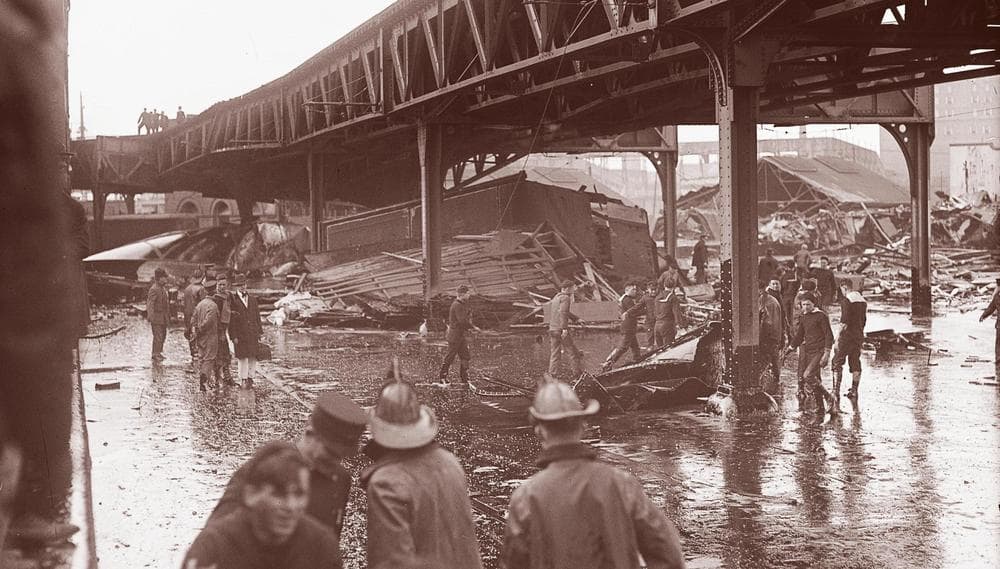
On January 15th, 1919, fiery hot molasses flooded the streets of Boston, killing 21 people and injuring scores of others. The molasses burst from a huge tank at the United States Industrial Alcohol Company building in the heart of the city. It was close to lunch time of January 15 and Boston was experiencing some unreasonably warm weather as workers were loading freight-train cars within the large building. Next to the workers was a 58-foot high tank filled with 2.5 million gallons of crude molasses. The bolts holding the bottom of the tank suddenly exploding, shooting out like bullets, and hot molasses rushed out. An eight-foot-high wall of molasses swept away the freight cars and caved into the building’s doors and windows. The workers that were in the cellar had no chance and were overwhelmed as the liquid poured in. The molasses flowed into the street, knocking over the firehouse and pushing over the support beams for the elevated train line. The hot and sticky substance then drowned and burned five workers at the Public Works Department. It took weeks to clean up the molasses, and led to 100 lawsuits being filed against the United States Industrial Alcohol Company. If you want to read more about this event, read Stephen Puleo’s Dark Tide and Lauren Tarshis’ I Survived the Great Molasses Flood, 1919.
On January 16th, 1919, a number of states ratified the 18th Amendment to the U.S. Constitution. The 18th Amendment prohibited the “manufacture, sale, or transportation of intoxicating liquors for beverage purposes,” and was caused by movement of alcohol prohibition in the early 19th Century throughout the United States. This was because of American concern about the effects of drinking and formed temperance societies. These groups became a powerful political force in the late 19th Century through campaigning on the state level and calling for total national abstinence (to stop indulging in something, typically alcohol). In December 1917, the 18th Amendment, also known as the Prohibition Amendment, was passed by Congress and sent to the states for ratification. Over Wilson’s veto, Congress passed the Volstead Act, or National Prohibition Act, nine months after the ratification, and was put into effect on January 17th, 1920, causing the nation to become dry. The Volstead Act failed to prevent large-scaled distribution of alcoholic beverages, and crime organizations flourished in America, until in 1933, the 21st Amendment to the Constitution was passed and ratified, repealing prohibition.