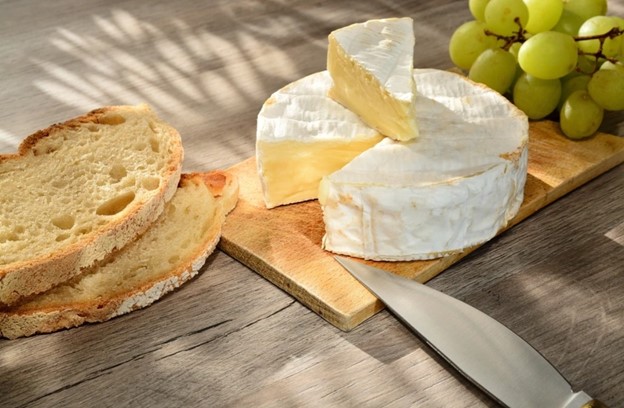
One may look at the title of this article and find it silly or wonder how a cheese can become extinct, however, yes it’s true a cheese can become extinct. Camembert and Brie are both endangered French cheeses and the reason why I’m creating this article. You may wonder to yourself how a cheese is going extinct, and I have two answers for you.
The knowledge of how to make the cheese may be lost over time, maybe an easier cheese to make which costs less and has around the same flavor profile exists. It’s also possible that the people who made that cheese couldn’t keep up with the changing economy. This causes them to stop producing the cheese and after a generation or two suddenly the knowledge on how to make the cheese is gone, and it’s lost to time.
Or the materials to make the cheese may be gone, such as the specific bacteria strand or mold strand required in the production of the cheese going extinct, which is exactly what happened in this situation.
Camembert and Brie both use a specific strand of mold, Penicillium Camemberti. This strain of mold is a white mold which gives Camembert and Brie their unique flavor, rind color, and texture.
This strain of mold has various problems with it’s genetic diversity, as when Brie and Camembert were first becoming mass produced, it was used to give these cheeses a consistent texture and color. The reason why they used Penicillium Camembertie was because it’s not a regular strain of mold, it’s an albino strain of mold. We cloned this specific strain for these cheeses, and the problem with cloning is the genetic diversity. As this strand of mold was cloned, it became solely asexual and required human intervention to reproduce properly, it also lost it’s ability to produce asexual spores. This is the source of our problems, because we’ve been cloning the same strain for over a century, the genetic diversity is suffering and it’s beginning to go extinct.
You may be feeling afraid for these French cheeses, however the loss of Penicillium Camemberti will not fully kill Camembert and Brie. Before the usage of Penicillium Camemberti, these cheeses used to use a different strand of mold called Penicillium Biforme. This mold is naturally occurring and reproduces sexually. Unfortunately this older strand is less predictable than Penicillium Camembertie, and it creates other colors and textures, so the white rind which many have come to associate with Brie and Camembert may be coming to an end.